Oh I have been waiting for this moment in time.
For more than fifteen years, social media has quietly but powerfully consumed our days. It shaped how we wake up, how we work, how we connect, and how we measure our own relevance. Notifications replaced natural pauses. Feeds replaced reflection. The rhythm of daily life became defined by algorithms, scrolling, posting, reacting and refreshing. At its peak around 2022 just after the pandemic, digital engagement was no longer a tool, it was the environment itself. And yet, almost imperceptibly at first, something began to shift.
Fatigue set in. Not just physical tiredness, but cognitive and emotional exhaustion. The need for daily content became the norm. The promise of constant connection delivered endless stimulation, but little depth. Algorithms optimized attention, not meaning. Experiences became filtered, curated, and performative. In response, people didn’t rebel loudly, they withdrew quietly. Screen time began to feel less like progress and more like noise. What followed was not rejection of technology, but a recalibration of how much of ourselves we were willing to give to it.
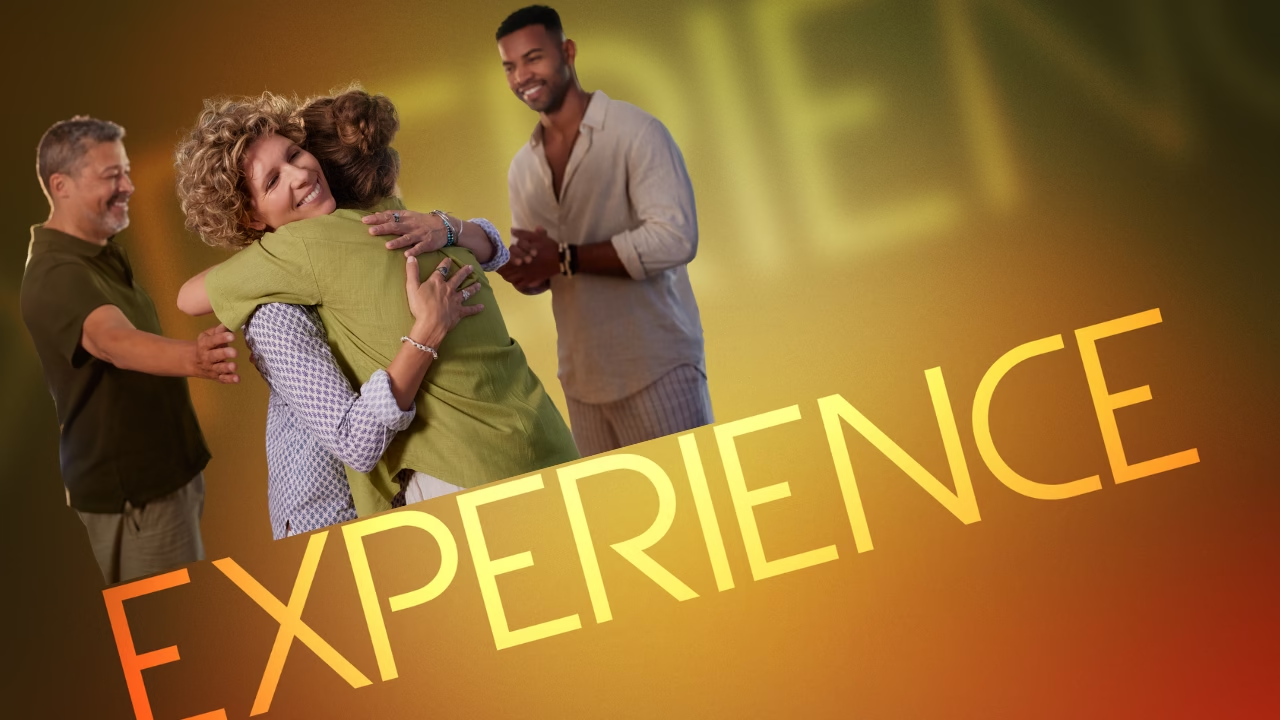
As we move toward 2026, experts are observing a collective turn toward activities that require hands, eyes, and genuine presence rather than screens. We have been testing this rhythm ourselves and it has proven to be most impactful in the work we create for our businesses, our community and most importantly our lives. This return to analog experiences is not about nostalgia or resisting modernity. It is a natural response to overstimulation and the artificiality that has come to define much of the digital landscape. Analog, by nature, is tangible, continuous, and human. It invites participation rather than consumption. It asks for attention rather than reaction.
Analog experiences are slower, but they are also richer. They engage the senses fully, touch, sound, sight, even silence. A handwritten note carries intention. A printed book invites immersion. An in-person conversation demands listening, not multitasking. These moments create memory rather than metrics. In a culture that has been optimized for speed and scale, analog offers depth and permanence.
This shift is beginning to reshape public spaces across Canada and beyond. Coffee shops, once dominated by rows of open laptops and silent productivity, are experimenting with journaling circles, conversation tables, and tech-free hours. Parks and community centres are hosting board game meetups, book club readings, and local workshops. Libraries are experiencing renewed interest, not just as places of study, but as spaces for calm, focus, and shared curiosity. The change is subtle, but it is unmistakably telling us it’s time!
What we are witnessing is not a rejection of progress, but a reclaiming of time. People are becoming more intentional about how they spend their attention, recognizing it as a finite and valuable resource. The constant pull of screens fragments focus, while analog experiences restore it. Presence becomes an act of resistance in a world designed to distract. Slowness becomes a form of clarity.
This movement also reflects a deeper cultural desire for authenticity. Digital spaces often reward polish, performance, and perfection. Analog spaces allow for imperfection, nuance, and honesty. Conversations are not edited. Moments are not staged. There is no algorithm deciding what matters most. Meaning emerges organically, through shared experience rather than digital validation.
In professional and creative environments, this return to analog is equally visible. More leaders are prioritizing in-person meetings over virtual ones, recognizing the trust and nuance that emerge face-to-face. Workshops are favouring whiteboards and notebooks over slide decks. Strategy sessions are designed to encourage deep thinking rather than rapid output. The goal is no longer to do more, faster, but to do what matters, better.
For younger generations raised entirely within the digital ecosystem, the appeal of analog is particularly striking. It offers novelty through simplicity. Activities like film photography, vinyl collecting, letter writing, and hands-on crafts are not retro curiosities, they are grounding experiences in a hyper-mediated world. They provide a sense of control, completion, and connection that digital environments often lack.
The analog shift is not loud. It does not announce itself with trends or hashtags. It shows up in small, intentional choices, leaving the phone behind on a walk, choosing a physical book, lingering in conversation, creating space for boredom and thought. Over time, these choices accumulate into a different way of living, one that values presence over performance and depth over immediacy.
As we approach 2026, the world may not look radically different at first glance. Screens will still exist. Technology will still advance. But beneath the surface, priorities are changing.
People are seeking experiences that feel real, human, and enduring. They are rediscovering the pleasure of the analog world, not as an escape from modern life, but as a way to live it more fully.
Now, let’s take that to work. Better yet, let’s take that home.
I know I am. Wishing you all a Very happy New Year and all the best experiences in 2026.
Read more in the December 31, 2025 issue of BUZZ DIGITAL MAGAZINE
Thank you for being here.
Virginia Munden