Colour is a powerful tool for expressing identity, guiding emotion, and shaping behaviour. In branding, real estate, design, and life itself, colour communicates before language. It sets expectations, establishes trust, and signals how something should be experienced. But colour only works when it is chosen with intention. And intention comes from understanding who you are.
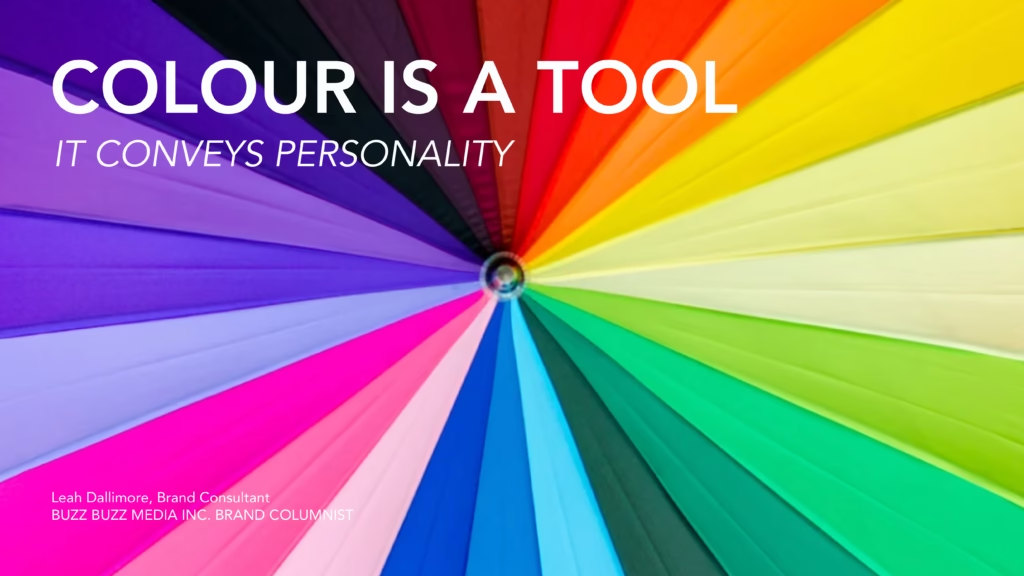
Our relationship with colour starts long before branding. It is shaped by where we grew up, the landscapes we live in, the environments we spend time in, and the emotional experiences we associate with certain tones. Urban density, natural surroundings, climate, culture, and community all influence how colour feels and functions. A palette that feels grounding in one environment can feel disconnected in another.
This is why colour cannot be separated from self-awareness.
Understanding your values, your priorities, and how you move through the world gives colour meaning. It allows you to choose tones that support how you lead, how you communicate, and how you want people to feel in your presence. Without this understanding, colour becomes reactive. Trend driven. Even predictable.
In real estate, colour operates on multiple levels at once. It influences brand perception, signage visibility, printed materials, digital platforms, and physical spaces. It affects how a brokerage is perceived, how an agent is remembered, and how a client feels walking into a home or reading a listing.
Imagine, for example, colour used strategically in a brokerage that planned its brand identity to carry its legacy and grow over time. Instead of committing to a single flat colour, they built a visual system around a gradient. A measured evolution of blue, chosen not only for trust and stability, but for longevity. The gradient allowed the brand to shift subtly as it reached ten, twenty, and thirty-year milestones, signalling progress without losing recognition. Change was anticipated, not reacted to. The colour system created continuity, allowing the brand to evolve while preserving the equity it had spent decades building.
This approach reflects what colour does best when there is thought behind it. It holds space for both who you are now and who you are becoming.
Designing a brand, especially in real estate, is rarely a purely rational process. It is emotional because it is personal. Your brand represents your reputation, your livelihood, and often years of work and sacrifice. Choosing colour forces you to confront identity. It asks difficult questions. Who are you today? Who do you want to be trusted as? What kind of presence do you want to hold in a room, in a market, in
someone’s life?
Having the right guidance allows ideas to move from feelings into solutions. Creating space to explore, test, and refine without losing confidence. This support turns vision into execution. It ensures that brand and colour choices are not just expressive, but functional across signage, print, digital platforms, and physical environments.
When colour is aligned with identity, values, landscape, and audience, it becomes a tool that works quietly and consistently. It reinforces trust. It creates recognition. It reduces decision fatigue. It allows everything else to fall into place naturally.
In life, we do this intuitively. We gravitate toward environments and colours that make us feel safe, energized, or grounded. In branding, the same principles apply. The difference is that the choices must be intentional and repeatable.
Colour is not about what looks good today. It is about what holds meaning over time.
When chosen with purpose, colour becomes a strategic language. One that communicates who you are, where you come from, and where you are going, without needing to explain itself.
And that is when colour stops being aesthetic and starts doing real work. This is part of an ongoing exploration of identity, strategy, and design. Stay connected for the next perspective.
Leah Dallimore, BBM Contributor
SOURCE, Leah Dallimore Branding & Design