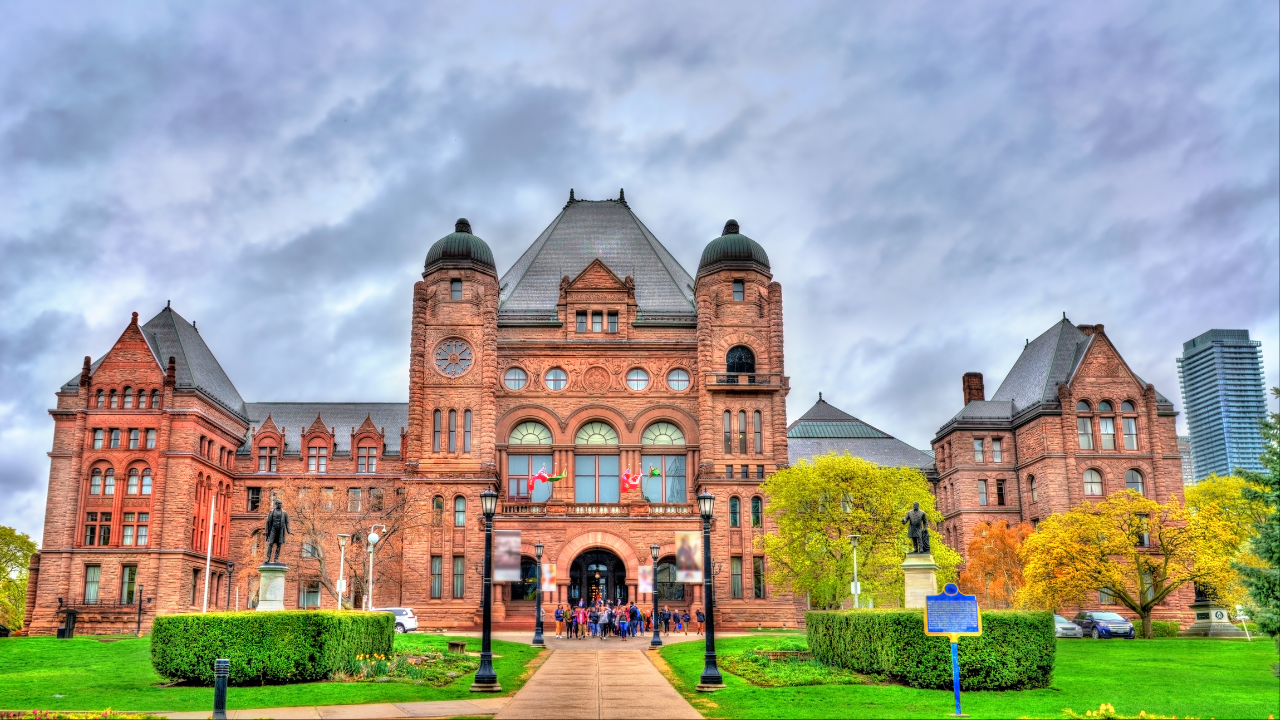
Canada likes to reassure itself with a comforting narrative, that we are stable, welcoming, resource-rich, and therefore naturally competitive in the global economy. For a long time, that story held. Today, it is wearing thin. Canada is not collapsing but it is drifting. And drift, in a global economy that moves quickly, is how great countries quietly lose their edge.
I write this not as a political partisan, but as an immigrant who chose Canada deliberately. I built my life here, created jobs here, paid into the system here, raised a family here, and believed, sincerely that this country rewarded effort, productivity, and long-term contribution. I still love Canada. But loving a country does not mean defending bad policy or staying silent while it is weakened from within by decisions that confuse symbolism with solutions and taxation with strategy.
At every level of government, federal, provincial, and especially municipal, the response to fiscal pressure has become predictable and dangerously lazy; add another tax. Income tax. Provincial tax. Federal tax. Sales tax. Land transfer tax. Development charges. Vacancy taxes. Now luxury taxes. Each new levy is introduced as if it exists in isolation, with little regard for cumulative impact. When all layers are combined, a productive Canadian can easily face an effective tax burden approaching 60 to 70 percent. And yet, despite this extraction, infrastructure continues to decay, housing shortages worsen, transit remains unreliable, healthcare is in crisis, and governments remain perpetually short of results.
Toronto offers the clearest example of this failure. Mayor Olivia Chow’s championing of a so-called luxury tax may sound appealing in a press conference, particularly when framed with the line that “wealthy buyers can afford it anyway and adding another $13.5M into city revenue.” But this assumption is not just simplistic, it is economically illiterate. Housing markets do not respond to moral arguments. Capital does not comply with political narratives. It moves.
What this policy will actually do is entirely predictable. Buyers will avoid higher brackets. Demand will compress below the threshold. Prices between roughly $1.5 million and $3 million will rise, not fall. Condo markets will become more expensive as capital shifts downward. And the truly wealthy, the very people policymakers assume will fund these ideas indefinitely will not stay put. They will reallocate their capital elsewhere. This is not theory. It is already happening.
Over the past two years, high-net-worth individuals, entrepreneurs, and investors, many of whom want to stay and invest in Canada have grown exhausted by constant rule changes, overlapping taxation from City Hall, Queen’s Park, and Ottawa, and a complete absence of execution discipline. Capital is mobile. Talent is mobile. Luxury real estate is among the most mobile asset classes in the world. Global cities actively compete for it with clarity, speed, and a pro-growth posture. Toronto increasingly treats investment as something to be penalized rather than partnered with, then acts surprised when activity slows.
This erosion is not limited to capital. It is happening with people as well.
Canada still attracts immigrants, but it is failing to retain talent. Skilled newcomers face credential barriers, integration and underemployment. Younger Canadian-born professionals compare after-tax income, housing costs, and career upside and increasingly look elsewhere. Immigration has helped mask Canada’s productivity problem by expanding the workforce, but productivity growth itself has lagged for more than a decade. GDP may rise in aggregate, but GDP per capita, the measure that actually reflects living standards has flatlined relative to peers like the United States. A country that imports people but exports ambition cannot remain competitive indefinitely.
Housing and infrastructure have become hidden taxes on the entire economy. Chronic undersupply of housing absorbs wage gains and limits labour mobility. Infrastructure delivery is slow, expensive, and constrained by public balance sheets already stretched thin. Municipalities respond not with reform, but with repeated property tax hikes. This is not strategy, it is surrender.
Toronto’s finances are structurally broken. The city operates in a billion dollar chronic deficit, and its debt is not going to disappear next year, or in ten years, or ever under the current model. Reaching repeatedly for symbolic taxes is an admission that leadership has run out of ideas. The city is trapped in negative cash flow while refusing to confront the obvious truth; this system cannot sustain itself.
The only realistic path forward is expanded privatization and disciplined public-private partnerships, not as ideology, but as necessity when governments lack capital capacity, execution speed, and risk tolerance. This is not theoretical. It has been executed successfully across advanced economies.
In France, public transit and utilities operate largely through concession-based private operators. Veolia and SUEZ manage water and waste infrastructure globally, including across France, under long-term public contracts. In rail transit, RATP operates Paris Metro infrastructure while private operators increasingly participate in service delivery, maintaining public ownership while importing private-sector efficiency. In Germany, infrastructure delivery relies heavily on private capital participation. Deutsche Bahn operates as a corporatized entity, blending public ownership with private-sector governance standards. Major Autobahn expansions have been delivered through PPP concessions, shifting construction and maintenance risk to private consortia while preserving public control over tolling and standards.
Where governments retain ownership, regulation, and public interest safeguards, and allow private capital and operators to design, build, finance, and maintain infrastructure, outcomes improve. Capital flows increase. Delivery accelerates. Risk is transferred. Service quality rises.
The choice is no longer between “public” and “private.”
It is between functioning systems and continued decline.
The claim that privatization destroys jobs is a political myth. Workers’ rights are not defined solely by unions, and protecting inefficiency is not the same as protecting workers. A system that rewards unproductive labour indefinitely does not preserve dignity, it hollows out competitiveness and eventually destroys the very jobs it claims to protect. Productivity and fairness are not enemies. Accountability and dignity must coexist.
Canada rightly prides itself on diversity, inclusion, respect, and peace. These values matter deeply. But values alone do not build housing, fund transit, or attract investment. Without productivity, execution, and economic realism, values become slogans rather than foundations. A country cannot tax its way to prosperity, and a city cannot levy its way out of structural failure.
What current policies deliver is modest, symbolic revenue at the cost of long-term damage; weaker investment, declining confidence, slower growth, and a steady erosion of Canada’s position in the global landscape. When governments consistently penalize the very people who build, invest, and take risk, the outcome is predictable. Capital leaves. Opportunity narrows. The tax base erodes further.
This is not pessimism. It is realism supported by data, migration patterns, and capital flows. Canada is at a pivotal inflection point. We can continue down the path of taxation without reform, or we can confront hard truths and restore competitiveness.
I am not writing this to be liked. I am writing it because silence now would be irresponsible. How much higher can taxes go before capital leaves permanently? How many more people must leave before we admit we are losing talent? And how many more years will we waste before accepting that the system is broken?
Canada is still a great country. But greatness is not guaranteed. It must be protected, not with slogans, but with decisions grounded in reality.
SOURCE, By Steve Tabrizi, COO, RE/MAX Hallmark Group of Companies
Monthly Contributor – Market & Economy
To learn more, visit RE/MAX HALLMARK